Multi-Omics Technologies: Connecting Genomics, Proteomics and Metabolomics
Discover how multi-omics integrates genomic, transcriptomic, proteomic and metabolic information to reveal biological mechanisms and advance modern biotechnology.
Living systems are governed by interconnected layers of molecular information. DNA encodes genetic information, RNA reflects patterns of gene expression, proteins perform essential biological functions, and metabolites participate in biochemical reactions.
Multi-omics technologies bring these complementary perspectives together, allowing researchers to investigate relationships between genetic information, molecular regulation and biological function. This integrated approach is transforming systems biology, disease research and modern biotechnology.
1. Understanding the Molecular Layers of Life
Biological function emerges from interactions between genes, proteins, regulatory mechanisms and biochemical processes. Although each molecular layer provides valuable information, no individual layer can fully describe the complexity of a living system.
For example, identifying a gene associated with a metabolic disorder does not necessarily explain whether its corresponding protein is produced, whether that protein is functional or how its activity influences cellular metabolism.
Multi-omics addresses this challenge by integrating measurements from complementary molecular technologies, providing a broader framework for investigating biological mechanisms.
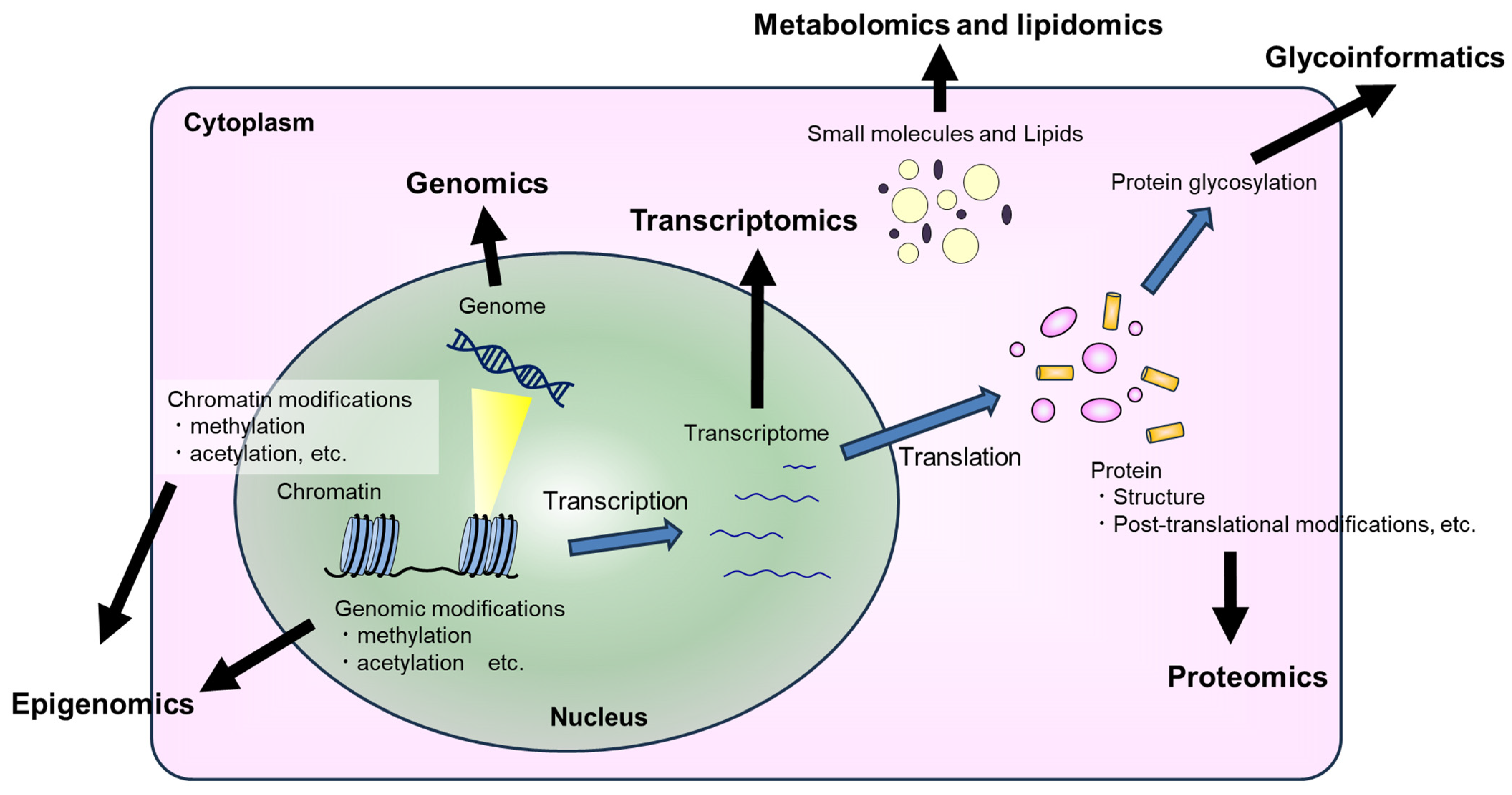
Source: Hayes et al. From Omics to Multi-Omics: A Review of Advantages and Tradeoffs. Genes, 15, 1551 (2024). Original Figure 1. CC BY 4.0. Unmodified figure.
2. Genomics: Exploring the Genetic Blueprint
Genomics investigates the genetic information contained within an organism. Sequencing technologies allow researchers to characterize DNA sequences, genetic variants and structural differences across genomes.
Genomic analysis has become essential in inherited disease research, cancer biology, evolutionary studies and agricultural biotechnology. It helps identify genetic characteristics that may contribute to particular biological traits.
However, the presence of a genetic sequence does not establish when it is expressed or how it influences cellular function. Understanding these relationships requires complementary information about gene regulation and RNA expression.
3. Transcriptomics and Epigenomics: Understanding Gene Regulation
Transcriptomics examines RNA molecules produced within biological systems. RNA sequencing provides information about expression patterns associated with cellular identity, differentiation and responses to environmental conditions.
Epigenomics investigates molecular features involved in the regulation of genetic information, including DNA methylation and chromatin accessibility. These features can influence how genetic information is used without changing the underlying DNA sequence.
Combining genomic, epigenomic and transcriptomic measurements can help researchers investigate why cells sharing similar genetic information exhibit different molecular characteristics. Nevertheless, RNA abundance does not directly establish protein abundance or biological activity.
4. Proteomics: Investigating the Functional Machinery of Cells
Proteins contribute to cellular organization, molecular transport, biochemical reactions, immune recognition and biological signaling. Proteomics investigates protein composition, abundance and selected molecular modifications within biological samples.
Mass spectrometry is a major analytical technology in proteomic research. It enables the identification and quantification of detectable proteins and, depending on the analytical method, their post-translational modifications.
For example, phosphorylation can alter protein activity without necessarily changing total protein abundance. Integrating proteomic measurements with transcriptomic information therefore helps researchers investigate regulatory processes that cannot be fully explained through gene expression alone.
5. Metabolomics: Connecting Molecular Activity with Cellular Physiology
Metabolomics investigates small molecules involved in biological processes, including amino acids, organic acids, sugars and other metabolic compounds. Their concentrations reflect interactions between enzymatic activity, cellular regulation and environmental conditions.
Liquid chromatography coupled with mass spectrometry, gas chromatography coupled with mass spectrometry, and nuclear magnetic resonance spectroscopy provide complementary approaches to metabolite analysis.
Metabolic measurements can reveal biochemical differences even when genomic or transcriptomic changes are relatively limited. However, metabolite abundance alone does not establish the rate of a biochemical reaction. Additional measurements may be required to investigate metabolic activity.
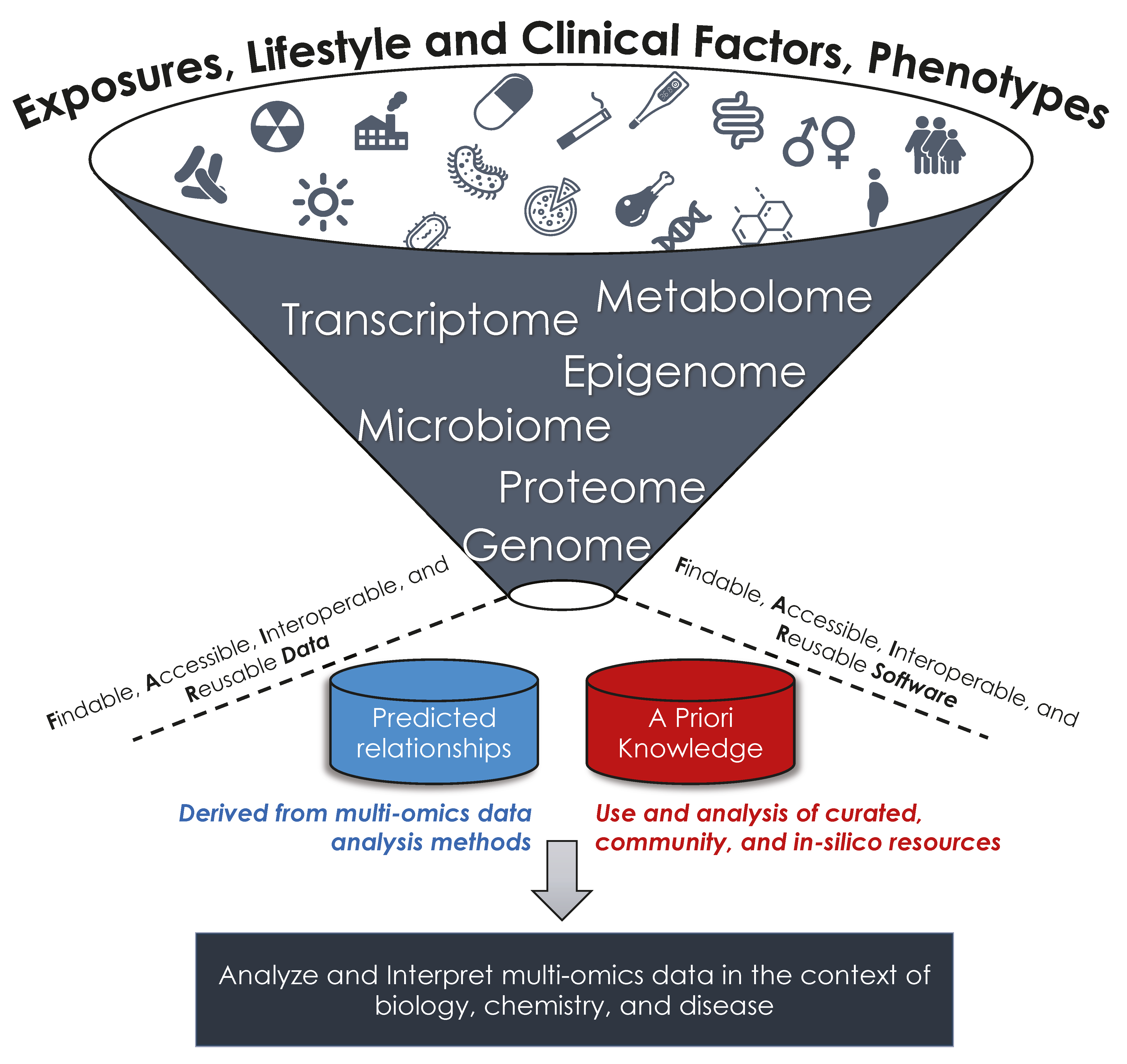
Source: Eicher et al. Metabolomics and Multi-Omics Integration: A Survey of Computational Methods and Resources. Metabolites, 10, 202 (2020). Original Figure 1. CC BY 4.0. Unmodified figure.
6. Integrating Complementary Omics Technologies
Each omics discipline addresses a different scientific question. Their integration allows researchers to investigate how molecular characteristics relate to one another across different levels of biological organization.
| Omics discipline | Molecular focus | Scientific contribution |
|---|---|---|
| Genomics | DNA | Genetic information and variation |
| Epigenomics | Epigenetic features | Genetic regulation |
| Transcriptomics | RNA | Gene expression patterns |
| Proteomics | Proteins | Protein composition and modification |
| Metabolomics | Small molecules | Biochemical characteristics |
| Lipidomics | Lipids | Lipid composition and associated pathways |
Table 1. Complementary molecular perspectives provided by major omics disciplines.
In a study of altered cellular metabolism, genomic analysis may identify a genetic variant, transcriptomics may reveal changes in expression, and proteomics may characterize the associated enzyme. Metabolomics can then provide information about related biochemical changes.
Together, these observations can support hypotheses about biological mechanisms that would be difficult to formulate using a single analytical technology.
7. Bioinformatics and Multi-Omics Data Integration
Integrating molecular datasets requires computational methods capable of handling differences in measurement scales, data structure, analytical sensitivity and technical variation.
Statistical analysis, machine learning and biological network modeling can help identify relationships between molecular features. Pathway analysis provides a complementary framework for examining whether observed changes involve shared biological processes.
| Integration approach | Main objective |
|---|---|
| Correlation analysis | Identify associations between molecular measurements |
| Pathway analysis | Connect molecular changes with biological pathways |
| Network modeling | Investigate interconnected biological relationships |
| Machine learning | Identify patterns and develop predictive models |
Table 2. Representative computational approaches for integrating multi-omics information.
Computational associations do not independently establish causal relationships. Experimental validation remains necessary to determine whether identified molecular interactions contribute directly to biological function.
8. Multi-Omics in Disease Research and Precision Medicine
Complex diseases frequently involve interactions between genetic variation, molecular regulation, cellular responses and environmental influences. Multi-omics provides opportunities to investigate these relationships within integrated research frameworks.
In cancer research, combining genomic and proteomic information can help investigate whether genetic alterations are associated with changes in signaling pathways. Metabolomic measurements can provide additional information about tumor-associated biochemical characteristics.
Similar approaches are valuable in metabolic disorders, immunology and neuroscience. Integrated molecular profiles may support biomarker research and disease classification, although their clinical relevance requires independent validation.
9. Standardization, Data Quality and Experimental Reliability
Multi-omics studies are particularly sensitive to differences in sample preparation, instrument performance and analytical methodology. Technical variation across molecular platforms can complicate the interpretation of biological relationships.
Reference materials, appropriate experimental controls and standardized quality assessment can help evaluate the consistency of molecular measurements. The Quartet reference materials study illustrates the importance of quantitative reference-based approaches for improving multi-omics comparability.
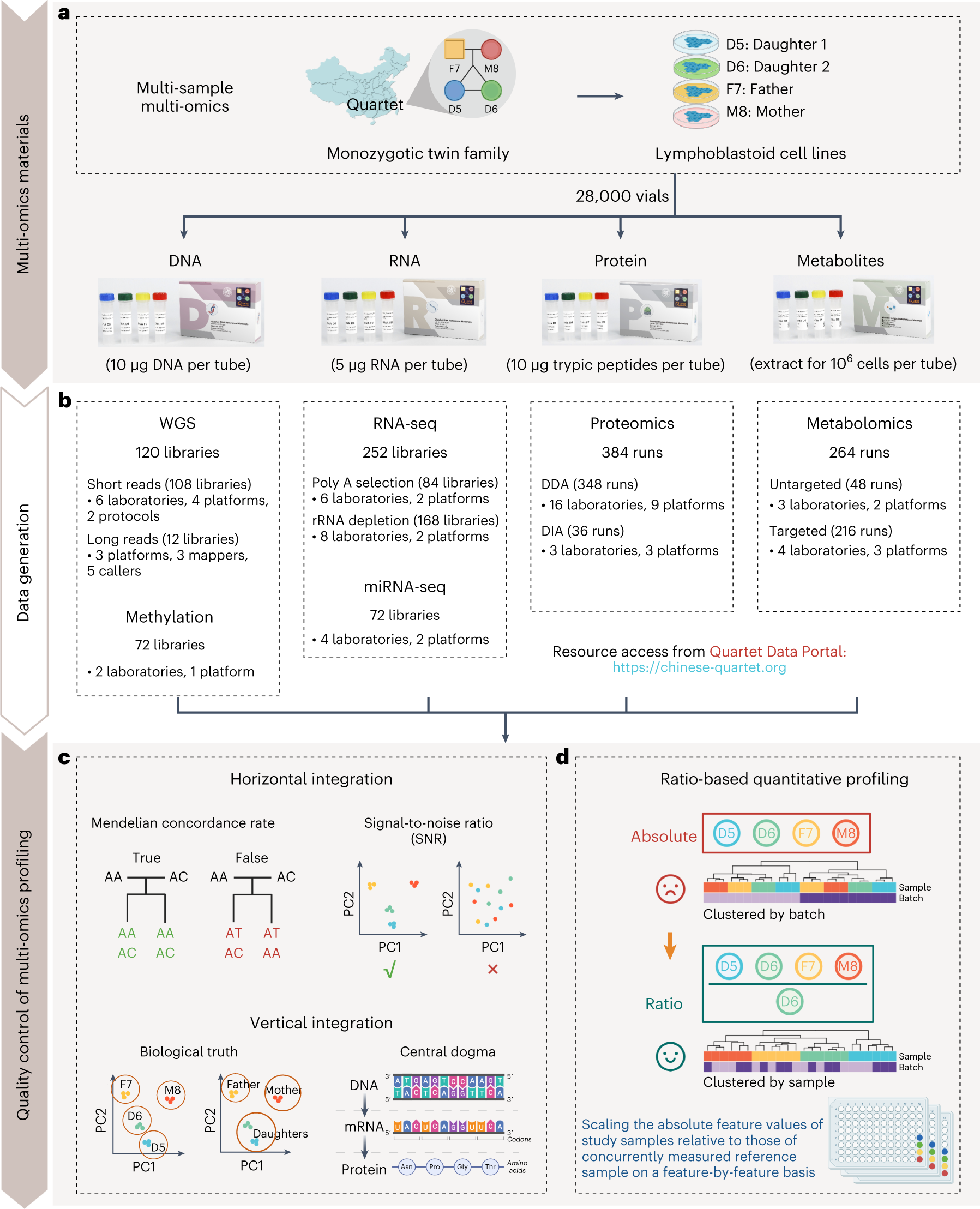
Source: Multi-omics data integration using ratio-based quantitative profiling with Quartet reference materials. Nature Biotechnology, 42, 1133–1149 (2024). Original Figure 1.
Reliable multi-omics research also depends on transparent data processing, appropriate biological replication and documentation of computational methods. More extensive molecular datasets are scientifically valuable only when their measurements and interpretation remain trustworthy.
10. From Integrated Molecular Knowledge to Modern Biotechnology
Multi-omics connects fundamental molecular biology with practical biotechnology applications. Integrated molecular profiling can support the characterization of biological models, investigation of candidate biomarkers and development of biopharmaceutical research systems.
Future research will increasingly combine multi-omics with single-cell technologies, spatial biology, artificial intelligence and advanced laboratory automation. These connections provide opportunities to investigate molecular organization across different biological scales.
Reliable sequencing reagents, analytical standards, antibodies, molecular assays and laboratory instrumentation remain essential to generating the experimental evidence underlying these advances.
Understanding life requires connecting its molecular layers rather than studying them independently.
By integrating genetic information, molecular regulation, protein characteristics and biochemical activity, multi-omics provides a scientific foundation for understanding biological complexity and advancing modern biotechnology.